A SIM card has one job: it proves to a mobile network that you are allowed to use it. For twenty-five years that proof lived on a piece of plastic you pushed into a slot. An eSIM — embedded SIM — does the same job from a chip soldered into the phone at the factory, and the proof arrives over the internet instead of over a shop counter.
That sounds like a minor manufacturing detail. In practice it changes the thing that actually annoys travellers: the gap between landing and being online.
How an eSIM actually works
The chip inside your phone is empty until something is written to it. What gets written is called a profile — a small bundle of credentials that identifies you to a particular network, on a particular plan.
- You buy a data plan for where you are going.
- You receive a QR code, or a link that installs the profile directly.
- Your phone downloads the profile and stores it on the built-in chip.
- When you arrive, you turn that line on and the local network lets you connect.
The profile is just data, so the download can happen anywhere you have a connection — typically at home, days before the trip. The activation is separate. Most travel plans start counting only when the eSIM first connects to a network in the destination, which is why installing early costs you nothing.
What changes compared with a plastic SIM
| Physical SIM | eSIM | |
|---|---|---|
| Getting one | A shop, a kiosk, or a posted envelope | A download, anywhere with internet |
| Time to first connection | However long the queue is | Seconds, once you land |
| Your usual number | Comes out of the phone and into your pocket | Stays in the phone, still receiving |
| Losing it | Easy — it is 12mm of plastic | Not really possible |
| Switching between plans | Tray, pin, fiddling | A toggle in settings |
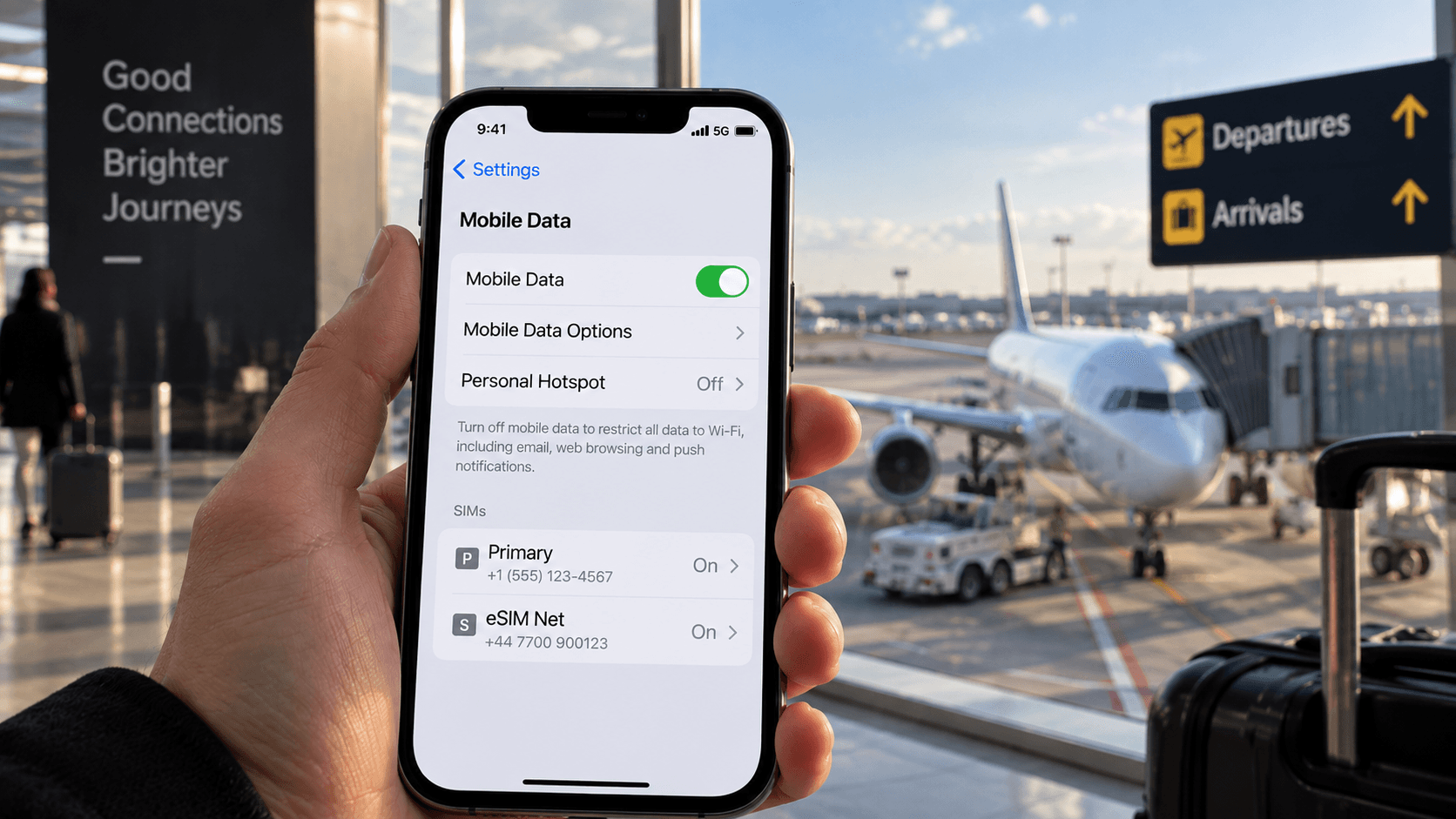
The second row of that table is the one that matters most and gets discussed least. A physical travel SIM forces a choice: your own number, or local data. An eSIM does not, because the phone runs both lines at once. Your bank can still reach you with a verification code while your maps run on local data.
Which phones support eSIM
Broadly: iPhone XS, XR and later; Google Pixel 3 and later; Samsung Galaxy S20 and later, plus recent Z Fold and Z Flip models; and a growing list from Motorola, Xiaomi, Oppo and Huawei. US iPhone models from the iPhone 14 onwards have no SIM tray at all — they are eSIM only.
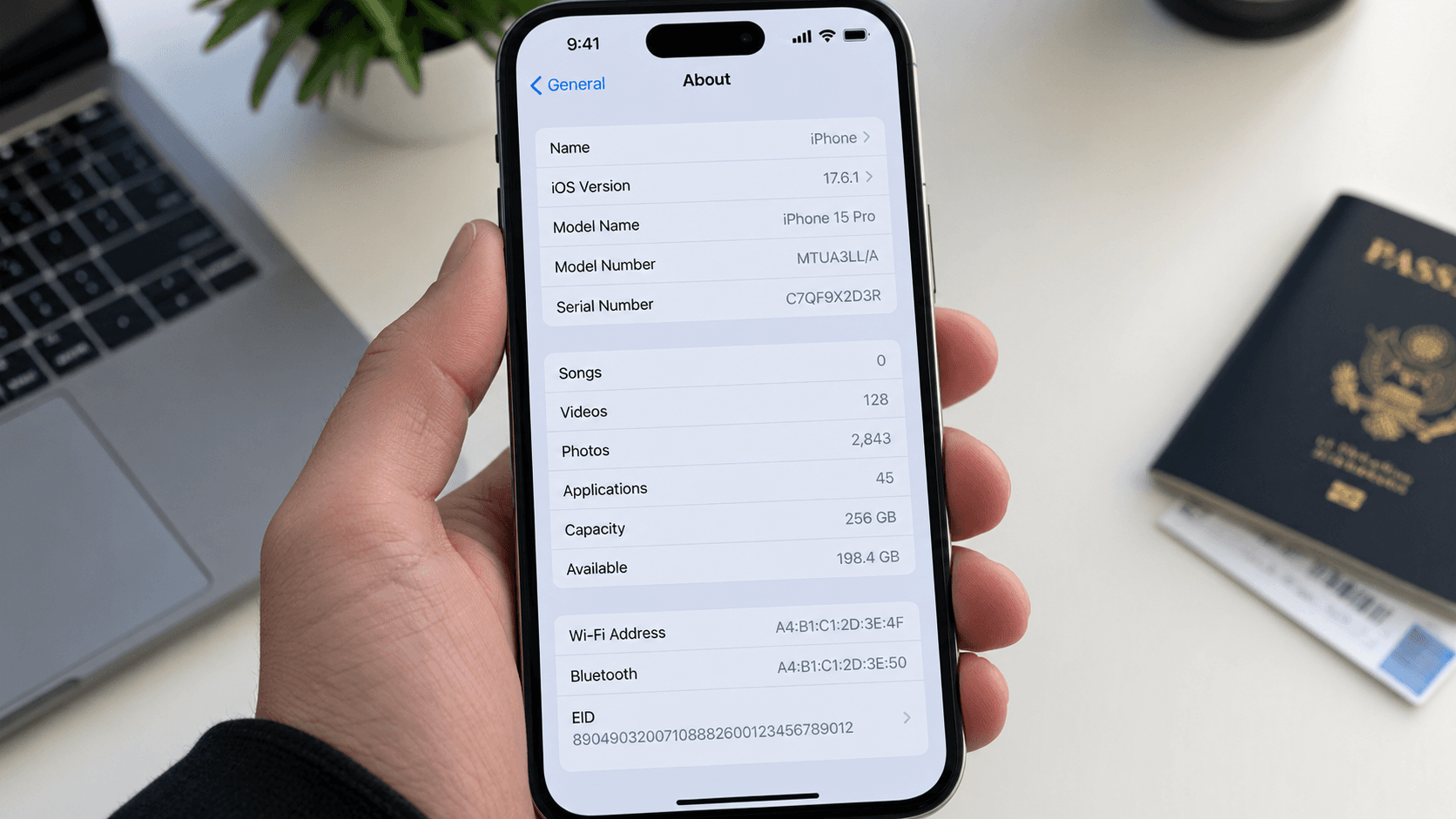
Two caveats matter more than the model list. First, a phone bought cheaply on a carrier contract may be network-locked, and a locked phone will refuse any eSIM that is not its carrier's. Second, a handful of regional variants ship without eSIM support even though the same model elsewhere has it. How to check your own phone in under a minute covers both.
Where an eSIM genuinely helps
- Short trips. A week in another country does not justify a contract, a shop visit, or a roaming day pass charged per day whether you use it or not.
- Multi-country trips. One regional plan can follow you across a continent without a new SIM at every border.
- Arriving late. Airport SIM counters close. A profile you installed at home does not.
- Keeping your number reachable. Two-factor codes, your airline, the person collecting you — all still work.
Where it helps less: if you are moving somewhere for a year, a local contract will beat any travel plan on price. And if you need a local phone number rather than local data — for a delivery app, say — a travel data eSIM does not give you one.
What it costs
Travel eSIM plans are priced by data and duration rather than by day of travel. At eSIM Net plans start from $2.99, and you choose the size that matches the trip. The comparison that usually decides it is against your own carrier: see what roaming actually costs against an eSIM for how the two add up over a week.