
Every option below connects you to the same physical towers. What differs is what you pay, how much of your time it costs, and what you give up to get it.
The five options at a glance
| Option | Effort | Typical cost for a week | Keeps your number |
|---|---|---|---|
| Carrier roaming (day pass) | None | Around $70–$100 | Yes |
| Carrier roaming (per MB) | None | Unpredictable, often worse | Yes |
| Travel eSIM | One install at home | A few dollars | Yes |
| Local SIM card | A shop, ID, sometimes a queue | Low, plus your time | No |
| Pocket Wi-Fi | Collection and return | Moderate, per device | Yes |
| Free Wi-Fi | Finding it | Free | Yes |
1. Carrier roaming
The zero-effort option: land, turn the phone on, it works. If your plan includes the destination — an EU plan inside the EU, or a premium plan with an international allowance — this is genuinely the best choice and you should stop reading.
If it does not, you are on a day pass at roughly $10–$15 per day of use, or on per-megabyte rates that were set when phones sent text messages. A two-week trip on a day pass costs more than most monthly phone bills. What roaming is and when to switch it off covers the detail.
2. A travel eSIM
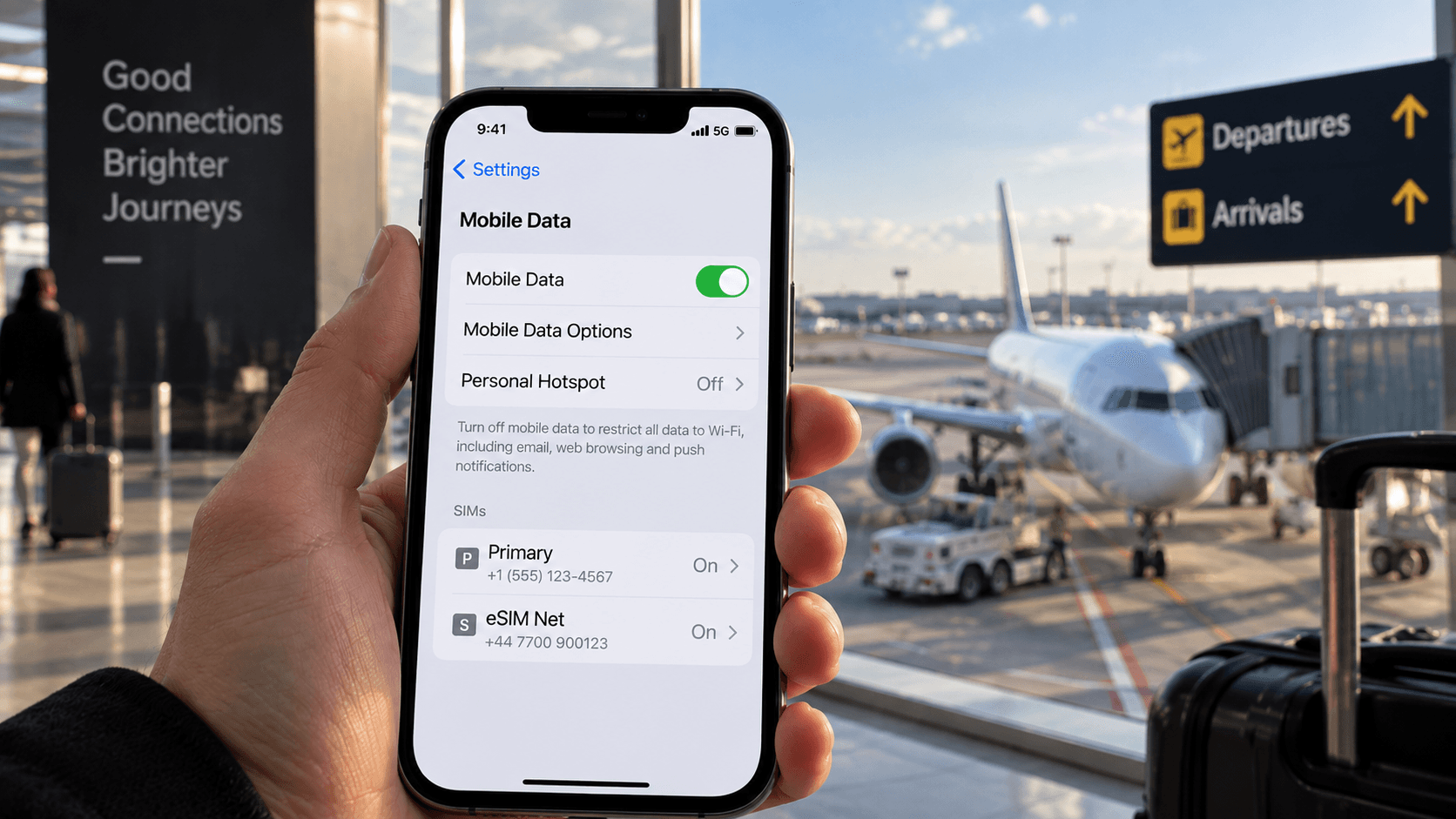
You buy a data plan for the destination before you go, install it in a minute over Wi-Fi at home, and switch it on when you land. Your own line stays in the phone, so calls, texts and verification codes keep arriving.
- Good for: trips from a weekend to a couple of months; multi-country trips on one regional plan; arriving late or outside shop hours.
- Less good for: phones that do not support eSIM, and stays long enough that a local contract wins.
- Cost: plans start from $2.99 and scale with data and duration rather than per day of travel.
The trade is that you have to think about it once, before you fly, rather than not at all. In exchange you stop paying by the day.
3. A local SIM card
Bought at the destination, from an airport counter or a phone shop. Usually the lowest headline price, especially for large data bundles, and it gives you a local number — which matters if you need one for a delivery app or a local service.
The costs are less visible. You queue, sometimes register with a passport, and you take your own SIM out of the phone — which means your number stops working, right when your bank wants to text you a code. You also do the whole thing again at the next border.
4. Pocket Wi-Fi
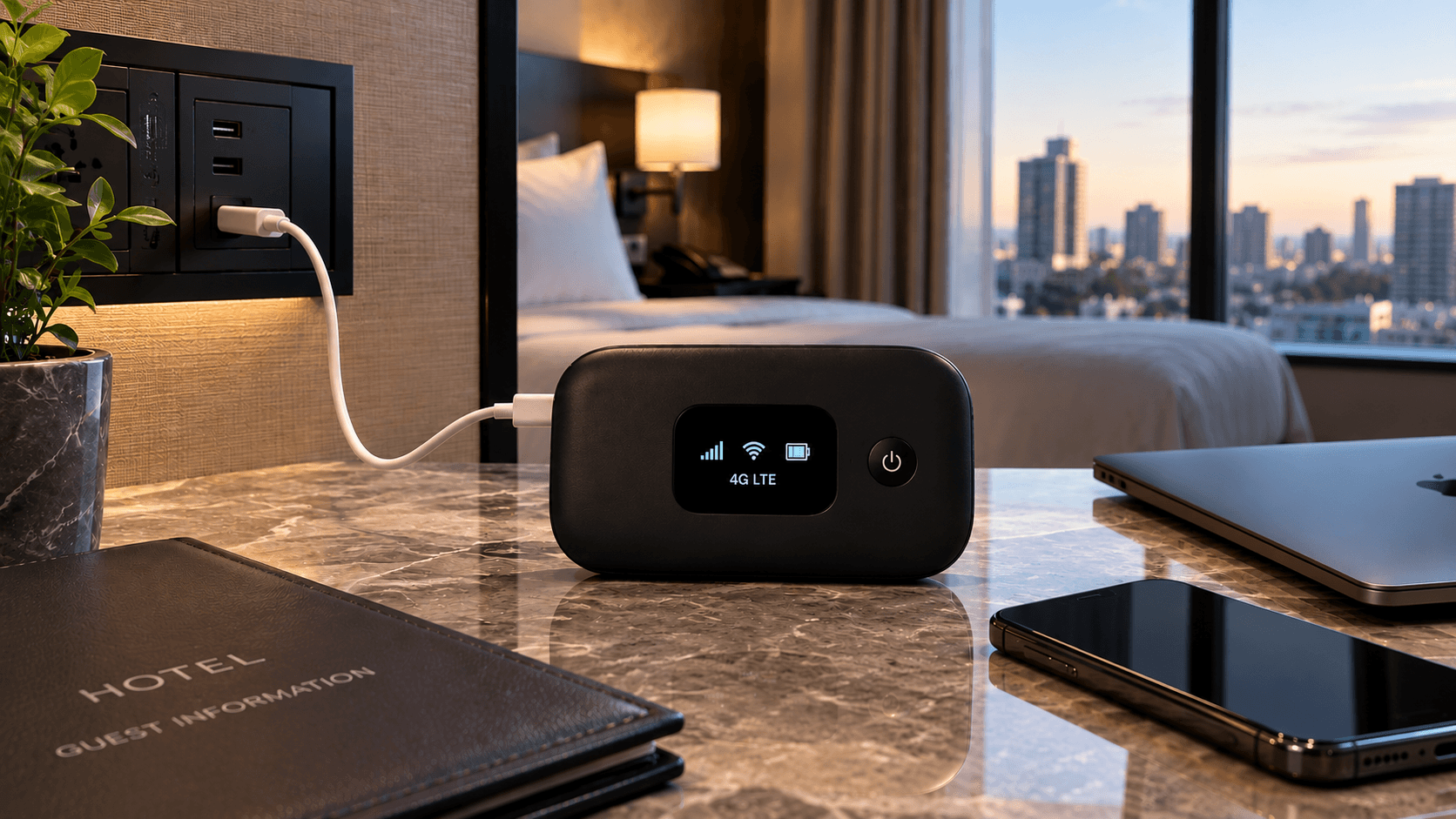
A rented battery-powered hotspot. One device connects several phones and laptops, which makes it genuinely sensible for families and small groups.
For one person it is a second device to charge, carry, not lose, and return on time — with a deposit attached to that last part. The full comparison is here.
5. Free Wi-Fi
Airports, cafés, hotels. Free, everywhere, and completely unreliable as a plan — it is not there when you are walking to an address, on a train, or in the back of a taxi that is going somewhere you did not ask for.
It also concentrates your traffic on networks anyone can join. What that actually exposes is less dramatic than headlines suggest and more real than most travellers assume.
How to choose in one line
- Your plan already covers the country → use roaming.
- Trip under about a month → travel eSIM.
- Moving there, or staying months → local SIM or contract.
- Group sharing one connection → pocket Wi-Fi.
- Phone does not support eSIM → local SIM.
If you are still weighing the first two, we ran the numbers on a real week-long trip.