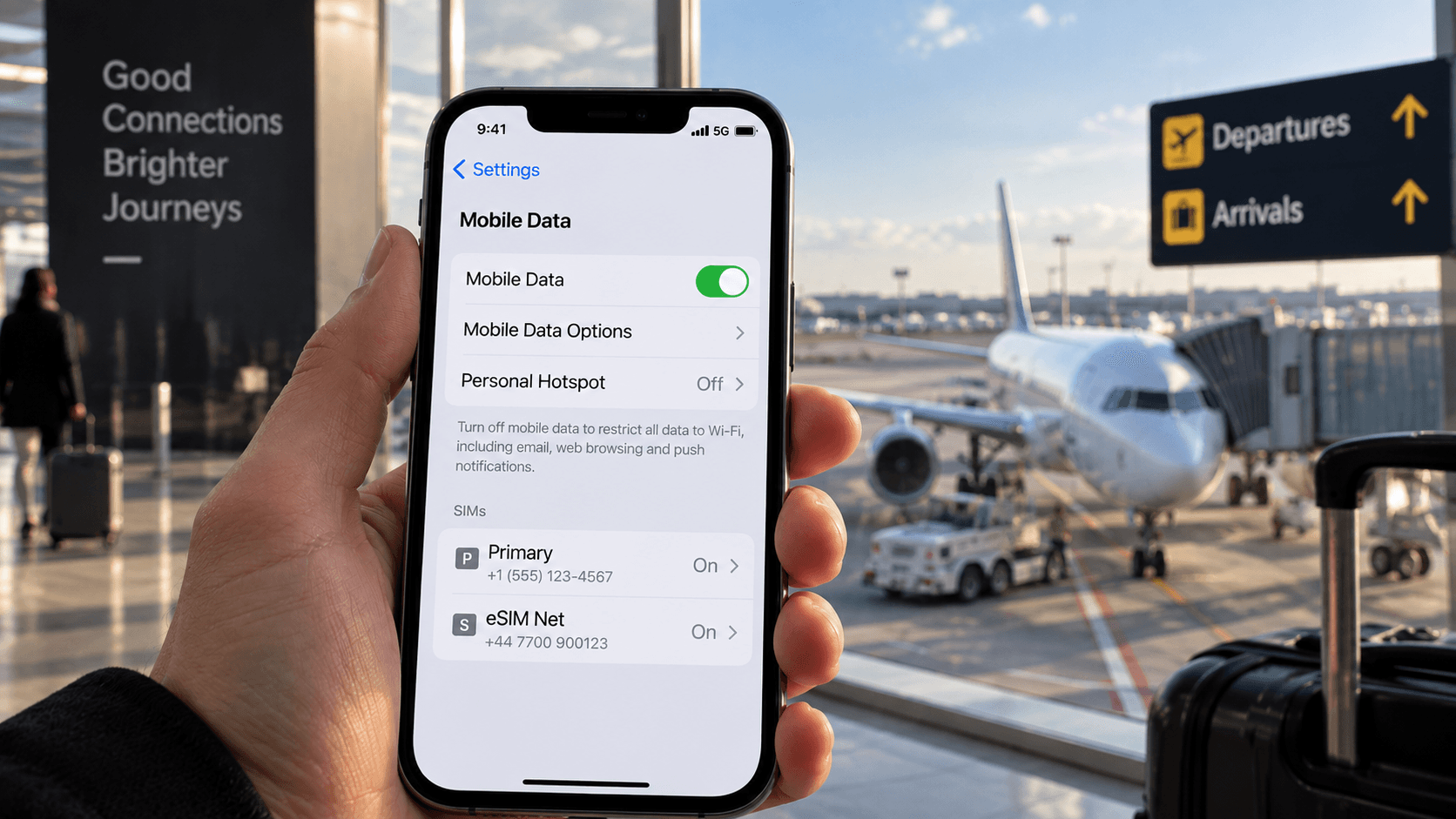
A SIM authenticates you to a network. That is the whole job, and both kinds do it identically. Everything below is about logistics, not about signal.
Side by side
| Physical SIM | eSIM | |
|---|---|---|
| Form | Removable plastic card | Chip soldered into the phone |
| How you get it | Shop, kiosk, or post | QR code or link, over the internet |
| Time to get online | Minutes to days | Minutes |
| Speed and coverage | Set by the network | Set by the network — identical |
| Moving to another phone | Pop it out, pop it in | Usually requires reissuing |
| Running two lines | Needs a dual-SIM phone | Standard on almost every supporting phone |
| If the phone is stolen | SIM can be removed and reused | Cannot be removed |
| If the phone breaks | Card goes in a spare phone | Line is stuck with the broken phone |
Where the eSIM clearly wins
Arriving somewhere. You install at home and switch on when you land. No queue, no closed kiosk, no photocopy of your passport at a counter at midnight.
Keeping your own number. Swapping in a local plastic SIM means taking your own out. Every verification code, every message from the person meeting you, goes to a card in your wallet. With an eSIM both lines run at once and you choose which one carries data.
Switching plans. Changing from a Spain plan to a France plan is a toggle, not a tray.
Not losing it. A nano-SIM is 12 millimetres of plastic that lives in a hotel-room envelope for two weeks. An eSIM cannot fall behind a radiator.
Where the physical SIM still wins
- Broken or lost phone. A plastic SIM goes straight into a borrowed handset. An eSIM does not travel that way — if your phone dies, so does the line until it is reissued.
- Older or locked phones. No eSIM support means no eSIM, and that is the end of it.
- Long stays. A local contract with a local number, bought in person, will usually undercut any travel plan over months rather than weeks.
- Needing a local number. Travel data eSIMs generally provide data, not a local number for calls or app verification.
Security
This is the difference people rarely consider until it matters. A stolen phone with a physical SIM hands the thief a working line: they can pull the card, put it in their own phone, and start receiving your text messages — including password resets. An embedded SIM cannot be pulled out. Wiping the phone remotely takes the line with it.
Neither kind protects you from SIM-swap fraud at the carrier level, which is a social-engineering problem rather than a hardware one.
So which one
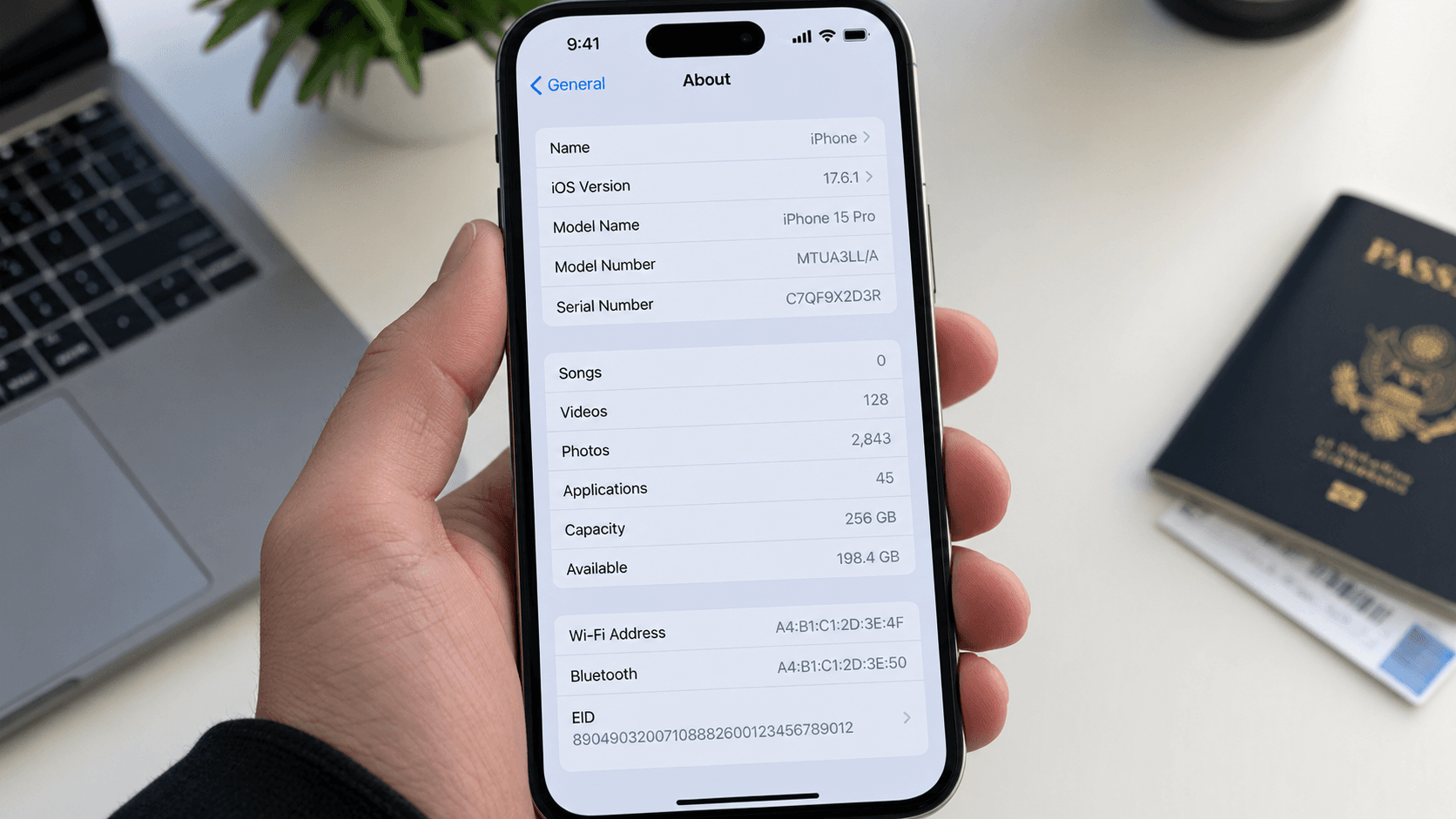
For travel, an eSIM alongside your existing SIM is the better arrangement for almost everyone, for reasons that have nothing to do with technology and everything to do with not standing in an airport queue. For living somewhere, buy locally. If your phone does not support eSIM — here is how to check — the question answers itself.