Airalo is the best-known name in travel eSIMs and a perfectly reasonable thing to buy. We would rather give you a way to judge any provider — including us — than tell you we win.
The six things that actually differ
1. The price of the plan you would actually buy
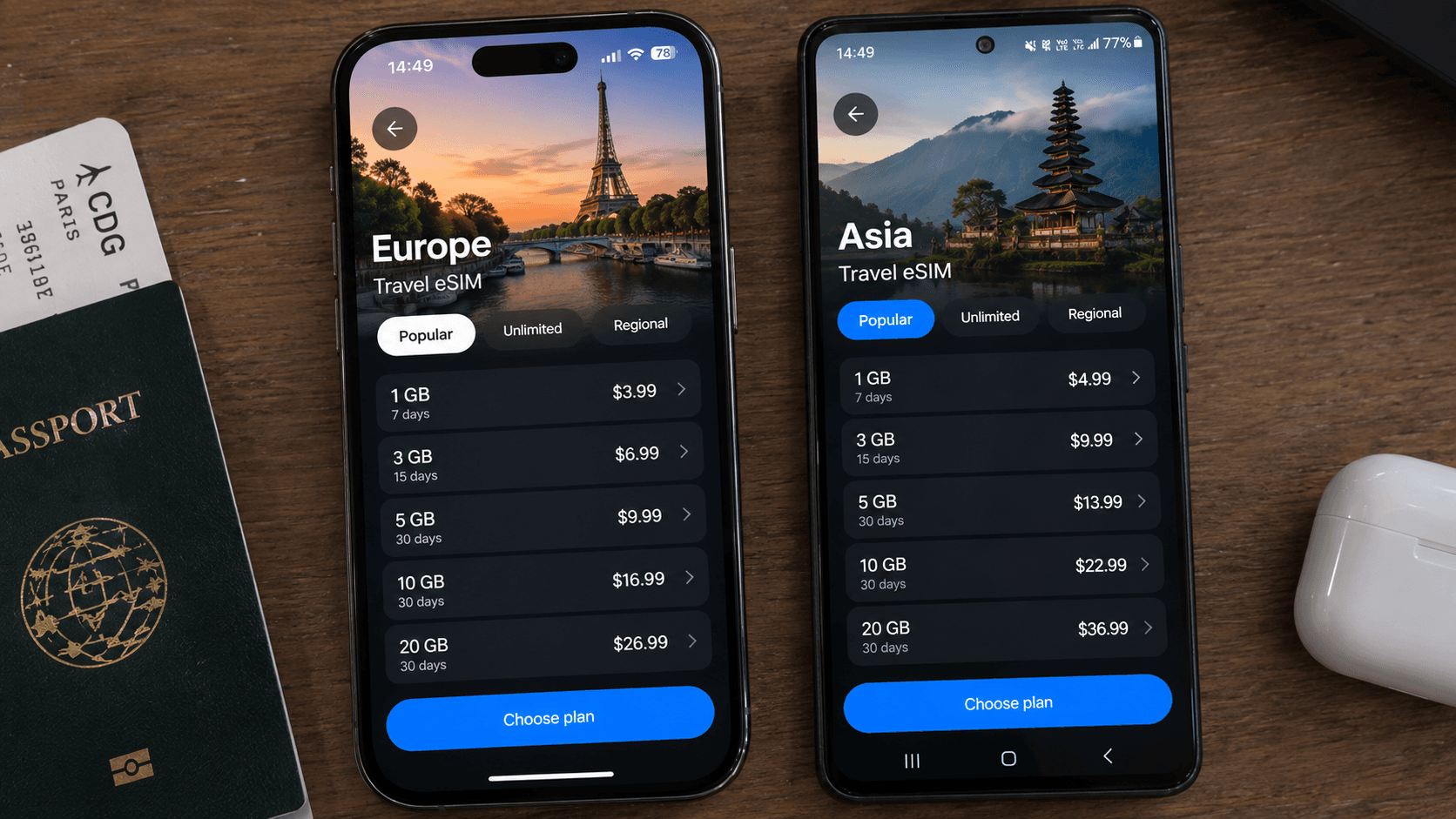
Not price per gigabyte. Providers size plans differently, and the cheapest per-gigabyte option is often a large plan you will not finish. Decide your data first — here is how — then compare the price of that plan on each site.
2. Validity period
A plan expires on a date as well as on a data total. A 5 GB plan valid for 7 days and a 5 GB plan valid for 30 days are different products at the same headline size. For a two-week trip, the first one is not cheaper — it is unusable.
3. The daily cap on unlimited plans
Nearly every "unlimited" travel plan, ours included, has a daily high-speed allowance and reduces speed after it. The cap is the real specification. Compare caps, not the word.
4. The coverage list
Regional plans disagree about which countries are in a region — the UK, Switzerland, Turkey and the Balkans are the usual flashpoints in Europe. Read the list against your itinerary. A plan that covers four of your five countries is not a cheaper plan.
5. What happens when something goes wrong
This is the part nobody compares until they need it. Find the refund policy before you buy, not after. Ours is on the refund policy page: in short, refunds are available on unused eSIMs, and once data has been used a plan is not refundable. Whatever provider you choose, read theirs and check that a human answers when you write to them.
6. Whether it is clear what you bought
Data amount, validity, daily cap, covered countries, top-up availability. If any of those take more than a few seconds to find on a plan page, that tells you something about what support will be like.
What is the same everywhere
- Speed and coverage. Every travel eSIM provider buys capacity from the same relatively small set of network operators. Nobody has private masts. If two plans use the same underlying network in a country, they perform the same.
- Installation. Scan a QR code, or tap a link. The process is defined by a GSMA standard, not by the provider.
- Keeping your own number. Every travel eSIM leaves your existing line alone.
That last group is why brand loyalty in this market is mostly manufactured. The differences are commercial, not technical.
Where we stand
- Plans from $2.99, priced per destination rather than per day of travel.
- Coverage in 200+ destinations, with each plan page listing exactly what is included.
- Delivery by email with a QR code, usually within a minute of payment.
- Refunds on unused eSIMs — the full terms are on the refund policy page.
- Top-ups without reinstalling, so running out mid-trip is not a restart.
Take those five points to any competitor and ask the same questions. If they answer better for your trip, buy from them — a customer who bought the wrong plan from us is not a win.